
Difference Between Nurse and Nursing: Easy Guide with Examples

Meta Descriptions
Learn the difference between nurse and nursing with simple explanations and examples. A beginner-friendly guide to understand healthcare roles.
Introduction
In the world of healthcare, the terms “nurse” and “nursing” are commonly used—but many people still feel confused about their exact meaning. Are they the same? Do they refer to the same role? Or is there a difference?
If you’re a student planning a healthcare career, a new nursing learner, or simply someone curious about the medical field, understanding this distinction is essential .
In this detailed guide, we will explain the difference between nurse and nursing in a simple, clear, and practical way—with examples, real-life insights, and career guidance.
👩⚕️ What Is a Nurse?
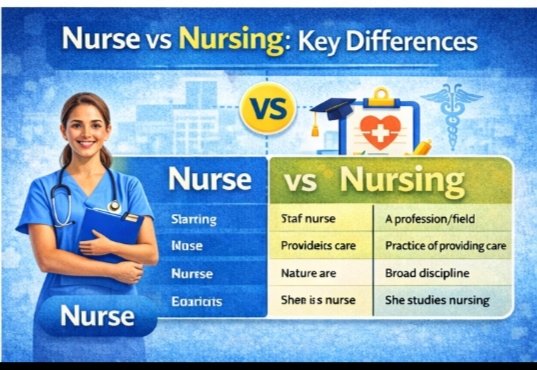
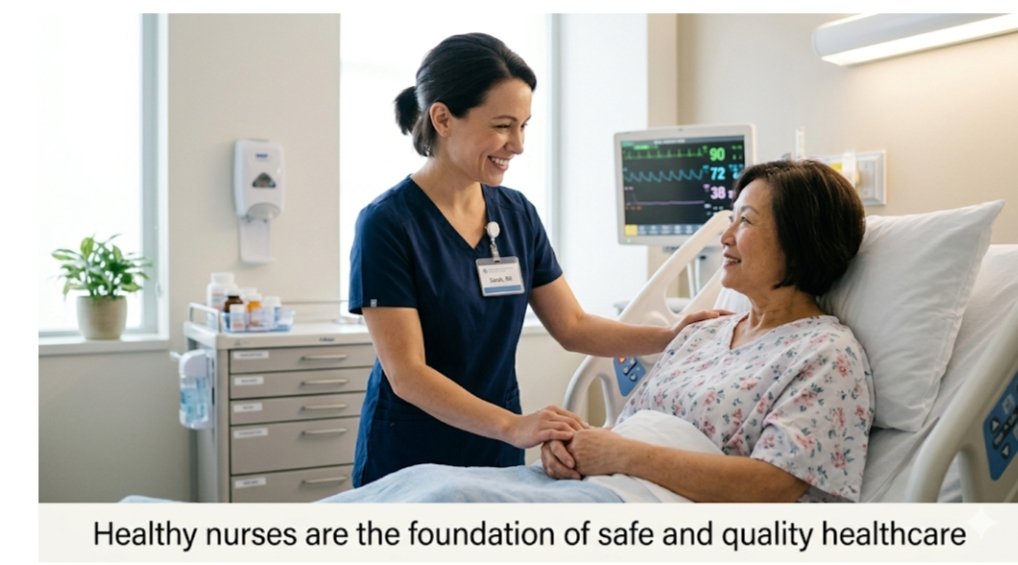
A nurse is a trained healthcare professional who provides direct care to patients and supports the overall healthcare system.Nurses are the backbone of patient care. They work closely with doctors, patients, and families to ensure safe, effective, and compassionate treatment.
✔️ Key Responsibilities of a Nurse
A nurse performs a wide range of duties, including:
Monitoring patient vital signs (BP, pulse, temperature)
Administering medications and injections
Assisting doctors during procedures
Providing wound care and dressing
Educating patients and families
Offering emotional and psychological support
Maintaining patient records
👉 In simple terms:A nurse is a person who provides care to patients.
🏥 Where Do Nurses Work?
Nurses can work in various healthcare settings:
Hospitals (ICU, emergency, wards)
Clinics and outpatient departments
Community health centers
Nursing homes
Home healthcare services
Schools and corporate settings
Nursing is the profession, science, and art of caring for people to maintain health, prevent illness, and support recovery.It is a broad field that includes not just patient care, but also education, research, leadership, and healthcare management.
✔️ Key Areas of Nursing
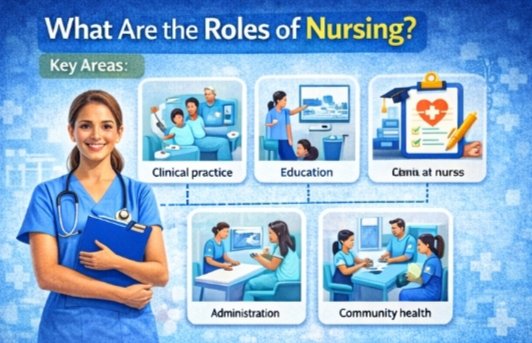
Nursing includes multiple domains:
Clinical Practice: Direct patient care
Education: Teaching nursing students
Administration: Managing healthcare teams
Research: Improving healthcare practices
Community Health: Promoting public health
👉 In simple terms:Nursing is the profession or field, while a nurse is the professional.
💡 Easy Examples to Understand
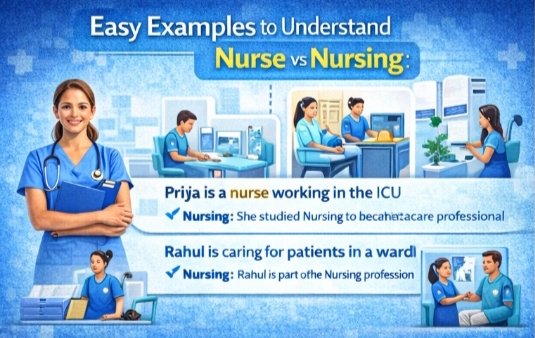
Let’s simplify with real-life examples:
Example1:Nurse: Priya is a nurse working in an ICU.
Nursing: Priya completed nursing education to become a healthcare professional.
Example 2:Nurse: Rahul is caring for patients in a ward.
Nursing: Rahul is part of the nursing profession.
👉 So:Person = NurseProfession = Nursing
🎓 How to Become a Nurse?
To become a nurse, you must complete formal education in nursing.
📚 Popular Nursing Courses:
ANM (Auxiliary Nursing Midwifery)
GNM (General Nursing and Midwifery)
B.Sc Nursing
Post Basic B.Sc Nursing
M.Sc Nursing
After completing your course, you must:Register with a nursing council
Obtain a license to practice
🌍 Scope of Nursing as a Career
Nursing is one of the most respected and in-demand careers globally.
🚀 Career Opportunities:
Staff NurseICU/Critical Care Nurse
Pediatric Nurse
Oncology Nurse
Community Health Nurse
Nurse Educator
Nurse Administrator
🌎 Global Opportunities
Nurses are in demand worldwide, especially in:
USA
UK
Canada
Australia
Middle East

❤️ Importance of Nursing in Healthcare
Nursing plays a vital role in ensuring patient safety and quality care.
🌟 Why Nursing Matters:
Provides continuous patient monitoring
Ensures safe medication administration
Builds trust with patients
Supports doctors and healthcare teams
Improves recovery outcomes
Nurses are often the first and last point of contact for patients.
🧠 Common Misconceptions About Nurse and Nursing
❌ Misconception 1: Nurse and Nursing are the same
✔️ Reality: Nurse = person, Nursing = profession
❌ Misconception 2: Nursing is only about bedside care
✔️ Reality: Nursing includes leadership, research, and education
❌ Misconception 3: Nursing is easy
✔️ Reality: It requires skill, critical thinking, and emotional strength
🧑⚕️ Skills Required to Become a Successful NurseTo succeed in nursing, you need a combination of:
💡 Technical Skills:
Clinical knowledge
Patient care techniques
Medication administration
❤️ Soft Skills:
Communication
Empathy
Teamwork
Problem-solving
The nursing profession is evolving rapidly with new technologies and healthcare advancements.
📈 Emerging Trends:
Digital health and telemedicine
Simulation-based training
Specialized nursing roles
Global demand for nurses
🚀 Why Nursing Is Future-Proof:
High demand globally
Job stability
Opportunities for growth
Ability to make a real difference

🧩 Nurse vs Nursing: Why Understanding the Difference Matters
Understanding the difference helps in:
🎯 1. Career Planning
Students can clearly understand what they are studying and what they will become.
🗣️ 2. Better Communication
Avoid confusion in academic and professional discussions.
🏥 3. Professional Identity
Helps nurses take pride in their role and profession.
✅ Conclusion:
A nurse is a trained healthcare professional who provides direct care to patients.Nursing is the profession and practice of providing that care.Both are closely connected, but they are not the same.Understanding this difference is important for students, healthcare workers, and anyone interested in the medical field.Nursing is not just a career—it is a commitment to care, compassion, and excellence.
❓ FAQs
What is the difference between nurse and nursing?
A nurse is a person, while nursing is the profession or field of healthcare.
Can I study nursing without becoming a nurse?
Most nursing courses lead to becoming a nurse or related roles in healthcare.
Is nursing a good career?
Yes, it offers job security, career growth, and global opportunities.
What qualifications are required to become a nurse?
Courses like ANM, GNM, B.Sc Nursing, and M.Sc Nursing are required.