
From Fresher to Professional: 100 Nursing Interview Questions and Answers
Meta Description: Prepare for your nursing job interview with this complete guide featuring 100 common nursing interview questions, sample answers, expert tips, and strategies for freshers and experienced nurses.
Introduction
Landing your first nursing job is an exciting milestone, but it can also be stressful. Whether you’re a newly graduated nursing student applying for your first staff nurse position or an experienced nurse seeking career advancement, preparing for the interview is one of the most important steps toward success.Nursing interviews are designed to assess much more than your academic knowledge. Recruiters want to know whether you can communicate effectively, think critically, prioritize patient safety, work well within a healthcare team, and remain calm under pressure.The good news is that most nursing interview questions follow common themes. With proper preparation, you can answer confidently and make a lasting impression.
This comprehensive guide will help you prepare by covering 100 of the most frequently asked nursing interview questions along with practical sample answers and interview tips.
How to Prepare Before a Nursing Interview
Before attending your interview:
– Research the hospital or healthcare organization.
– Review common nursing procedures and medication safety principles.
– Refresh your knowledge of infection prevention and patient safety.
– Practice answering interview questions aloud.
– Prepare examples from your clinical training or work experience.
– Dress professionally and arrive early.
– Bring copies of your resume, certificates, and identification documents.Confidence comes from preparation.
Tips for Answering Nursing Interview Questions
Remember these simple strategies:
– Listen carefully before answering.
– Speak clearly and confidently.
– Be honest if you don’t know an answer.- Focus on patient safety.
– Use real clinical examples whenever possible.
– Maintain eye contact and professional body language.
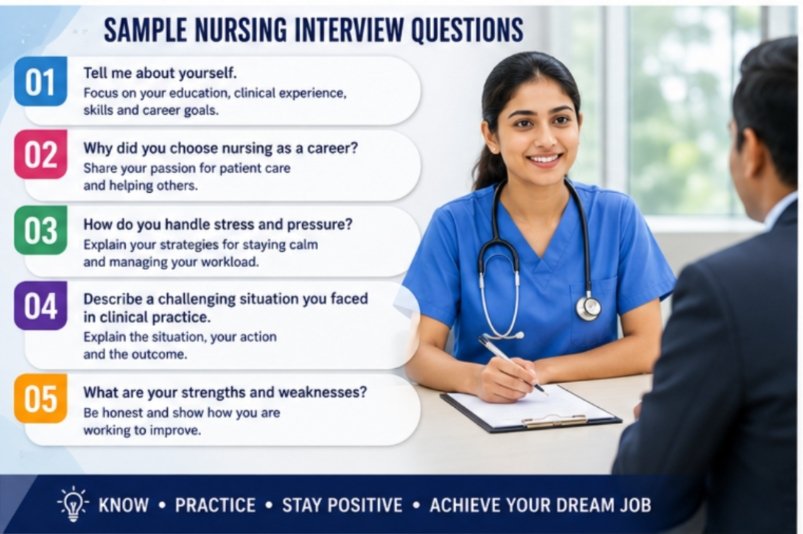
General Nursing Interview Questions
1. Tell us about yourself.
“I recently completed my nursing education and clinical training, where I gained experience in medical-surgical, pediatric, obstetric, and community health nursing. I enjoy caring for patients, learning new skills, and working collaboratively with healthcare teams. My goal is to provide compassionate, safe, and evidence-based patient care while continuously improving my professional knowledge.”
2. Why did you choose nursing as your career?
“I chose nursing because I enjoy helping people during some of the most challenging moments of their lives. Nursing combines science, compassion, communication, and lifelong learning, making it both rewarding and meaningful.”
3. Why do you want to work in our hospital
“I admire your hospital’s commitment to quality patient care, continuous learning, and professional development. I believe this environment will help me grow while allowing me to contribute positively to patient outcomes.”
4. What are your greatest strengths?
“My strengths include empathy, effective communication, adaptability, teamwork, and attention to detail. These qualities help me provide safe and compassionate nursing care.”
5. What is your biggest weakness?
“I sometimes spend extra time double-checking my work because patient safety is important to me. However, I have learned to balance accuracy with efficient time management.”
6. Why should we hire you?
“I am committed to patient-centered care, eager to learn, adaptable to new situations, and willing to work hard. I believe my enthusiasm, clinical knowledge, and positive attitude would make me a valuable member of your nursing team.”
7. Where do you see yourself in five years?
“In five years, I hope to become a highly competent nurse, earn specialty certifications, mentor junior nurses, and contribute to improving patient care within the organization.”
8. What motivates you as a nurse?
“My biggest motivation is knowing that my care can improve a patient’s health, comfort, and overall experience during hospitalization.”
9. How do you handle stress during busy shifts?
“I stay organized, prioritize patient care based on urgency, communicate effectively with my team, and remain calm under pressure. Good teamwork helps reduce stress significantly.”
10. Why did you leave your previous job?
“I appreciated my previous role and learned valuable skills there. However, I am now looking for greater opportunities for professional growth, learning, and career advancement.”
Clinical Nursing Interview Questions
11. What are the rights of medication administration?
The core rights include:
– Right patient
– Right medication
– Right dose
– Right route
– Right time
Many hospitals also include:
– Right documentation
– Right reason
– Right assessment
– Right response
– Right patient education
12. How do you prevent medication errors?
I verify patient identification using two identifiers, follow medication administration rights, check allergies, confirm medication orders, minimize distractions, and document accurately after administration.
13. What would you do if a patient suddenly became unconscious?
I would immediately assess airway, breathing, and circulation, call for emergency assistance, activate the emergency response system if required, begin appropriate life-support measures, monitor vital signs, and prepare emergency equipment according to hospital protocols.
14. What is the first priority when assessing a patient?
The first priority is ensuring the patient’s airway is open, breathing is adequate, and circulation is stable by following the ABC approach.
15. What are the signs of infection?
Common signs include fever, redness, swelling, warmth, pain, purulent discharge, increased white blood cell count, and delayed wound healing.
16. How do you maintain patient confidentiality?
I protect patient information by following hospital privacy policies, sharing information only with authorized healthcare professionals, securing documentation, and avoiding discussions about patients in public areas.
17. How do you educate patients before discharge?
I explain medications, follow-up appointments, warning signs, dietary recommendations, activity restrictions, wound care instructions, and encourage patients to ask questions to ensure understanding.
18. What would you do if you made a medication error?
I would immediately ensure the patient’s safety, inform the supervising nurse and physician according to hospital policy, monitor the patient, document the incident accurately, and participate in reviewing the event to help prevent similar errors in the future.
19. How do you prioritize patient care?
I use the ABC (Airway, Breathing, Circulation) approach, consider patient stability, urgency, and potential risks, and prioritize interventions that address life-threatening conditions first.
20. Why is infection control important?
Infection control reduces healthcare-associated infections, protects patients and healthcare workers, improves patient outcomes, and supports overall quality of care.
Behavioral Interview Questions
21. Describe a difficult situation you faced during clinical training.
Sample Answer:
During clinical placement, I cared for a patient who became anxious before a procedure. I listened to the patient’s concerns, explained the procedure in simple language, and informed my supervising nurse. The patient became calmer and more cooperative, reinforcing the importance of communication and empathy.
22. Describe a time you worked as part of a healthcare team.
Sample Answer:
During my clinical rotation, I collaborated with nurses, physicians, physiotherapists, and support staff to coordinate patient care. Effective communication and teamwork ensured timely treatment and improved patient outcomes.
23. How would you handle an angry patient’s family member?
Sample Answer:
I would remain calm, listen respectfully, acknowledge their concerns, provide accurate information within my scope, and involve senior staff if additional support is needed.
24. Tell us about a mistake you learned from.
Sample Answer:
During clinical training, I once forgot to document a routine observation immediately after completing it. Although no harm occurred, I learned the importance of timely documentation and now make it a priority after every patient interaction.
25. What does excellent nursing care mean to you?
Sample Answer:
Excellent nursing care means providing safe, compassionate, evidence-based, patient-centered care while respecting each patient’s dignity, communicating effectively, and continuously striving for professional improvement.

Coming Up in Part 2
Part 2: Questions 26–50 (ICU, Emergency, Medical-Surgical, Pediatric & Scenario-Based)ICU & Critical Care Nursing Interview Questions
26. What are the priority responsibilities of an ICU nurse?
An ICU nurse is responsible for continuous patient monitoring, administering critical medications, managing ventilators and life-support equipment, recognizing early signs of deterioration, maintaining accurate documentation, and communicating effectively with the multidisciplinary healthcare team.
27. What would you do if a patient’s oxygen saturation suddenly dropped?
I would immediately assess the patient’s airway, breathing, and circulation (ABC), ensure the oxygen delivery device is functioning properly, reposition the patient if appropriate, monitor vital signs, notify the physician or rapid response team according to hospital policy, and prepare emergency equipment if needed.
28. Explain the ABC approach in emergency nursing.
ABC stands for:A – Airway: Ensure the airway is open.B – Breathing: Assess breathing and provide oxygen if needed.C – Circulation: Evaluate pulse, blood pressure, and circulation.This approach helps nurses prioritize life-threatening conditions.
29. What signs indicate patient deteriorating?
Warning signs include:Decreased level of consciousnessDifficulty breathingLow oxygen saturationHypotensionRapid or slow heart rateReduced urine outputChest painCyanosisEarly recognition allows timely intervention.
30. How do you respond during a Code Blue?
I would activate the emergency response system, begin CPR if indicated, assist the resuscitation team, prepare emergency medications and equipment, monitor the patient, document events accurately, and support the healthcare team throughout the resuscitation process.
Medical-Surgical Nursing Interview Questions
31. What nursing assessments are important after surgery?
Postoperative assessments include:
Airway and breathing
Vital signs
Pain level
Surgical wound
Bleeding
Urine output
Level of consciousness
Signs of infection
32. What are the signs of shock?
Common signs include:
Rapid pulse
Low blood pressure
Cold, clammy skin
Pale appearance
Confusion
Decreased urine output
Rapid breathing
Shock is a medical emergency requiring immediate intervention.
33. How do you prevent pressure injuries?
I reposition patients regularly, inspect the skin daily, keep the skin clean and dry, use pressure-relieving devices, encourage mobility when possible, and ensure adequate nutrition and hydration.
34. What are the symptoms of hypoglycemia?
Symptoms include:
Sweating
Tremors
Hunger
Dizziness
Confusion
Weakness
Irritability
Loss of consciousness in severe cases
Prompt treatment is essential.
35. How do you manage a patient with severe pain?
I assess the pain using an appropriate pain scale, identify the cause, administer prescribed analgesics, evaluate the patient’s response, provide comfort measures, and reassess pain regularly.
Pediatric Nursing Interview Questions
36. How do you communicate with children during nursing care?
I use age-appropriate language, speak calmly, involve parents when appropriate, explain procedures simply, use distraction techniques, and create a friendly environment to reduce fear.
37. Why are medication calculations especially important in pediatric nursing?
Children receive medication doses based on weight or body surface area. Accurate calculations are essential to prevent underdosing or overdosing.
38. What are common signs of dehydration in children?
Signs include:
Dry mouth
Sunken eyes
Decreased urine output
Poor skin turgor
Lethargy
Irrability
Increased heart rate
39. How do you comfort anxious parents?
I listen carefully, answer questions honestly, explain the treatment plan, provide emotional support, and encourage them to participate in their child’s care whenever appropriate.
40. Why is family-centered care important?
Family-centered care improves communication, builds trust, supports emotional well-being, and helps families participate in healthcare decisions, leading to better patient outcomes.
Scenario-Based Interview Questions
41. What would you do if a patient refused medication?
I would assess the reason for refusal, provide clear education about the medication, answer any questions, respect the patient’s right to refuse, document the refusal accurately, and notify the physician according to hospital policy.
42. What would you do if you noticed a colleague making a medication error?
Patient safety is my priority. I would intervene immediately if safe to do so, ensure the patient is protected, report the incident through appropriate channels, and follow hospital policies while maintaining professionalism and respect.
43. What would you do if two patients needed you at the same time?
I would quickly assess which patient has the most urgent clinical needs using prioritization principles such as ABC (Airway, Breathing, Circulation). If necessary, I would seek assistance from colleagues to ensure both patients receive timely care.
44. How would you manage multiple tasks during a busy shift?
I prioritize patient care based on urgency, organize my workload, communicate effectively with the healthcare team, delegate tasks appropriately when allowed, and remain flexible as priorities change.
45. A patient suddenly develops chest pain. What is your first action?
I would immediately assess the patient’s condition, check vital signs, ensure the patient is in a safe position, notify the physician or emergency response team according to hospital protocol, administer oxygen if prescribed, and prepare for further interventions.
Infection Control Questions
46. Why is hand hygiene so important?
Hand hygiene is the most effective method of preventing healthcare-associated infections. It protects both patients and healthcare workers by reducing the spread of harmful microorganisms.
47. What personal protective equipment (PPE) should nurses use?
The choice of PPE depends on the clinical situation but may include:
GlovesMasks
Gowns
Eye protection
Face shields
PPE should always be selected according to standard and transmission-based precautions.
48. What is the purpose of standard precautions?
Standard precautions reduce the risk of infection transmission by treating all blood and body fluids as potentially infectious and promoting safe healthcare practices.
Professional Practice Questions
49. Why is accurate nursing documentation important?
Documentation ensures continuity of care, improves communication among healthcare professionals, supports patient safety, meets legal requirements, and provides evidence of nursing care delivered.
50. What qualities make an excellent nurse?
An excellent nurse demonstrates compassion, clinical competence, critical thinking, communication skills, professionalism, integrity, teamwork, adaptability, emotional intelligence, and a commitment to lifelong learning while always prioritizing patient safety.

Part 3: Questions
51–75 (Pharmacology, Obstetrics, Dialysis, Oncology, Psychiatry, Ethics & Leadership)In this section, we’ll cover advanced nursing interview questions commonly asked during hospital recruitment for staff nurses, specialty units, and experienced nursing positions.Pharmacology & Medication Safety Interview Questions
51. Why is medication safety important in nursing?
Sample Answer:Medication safety prevents medication errors, reduces adverse drug reactions, protects patients from harm, and improves healthcare quality. Nurses must always follow the medication administration rights, verify patient identity, assess allergies, and document medications accurately.
52. What are High-Alert Medications?
Sample Answer:High-alert medications are drugs that carry a higher risk of causing significant patient harm if used incorrectly. Examples include insulin, heparin, chemotherapy drugs, concentrated electrolytes, and opioids. These medications require extra caution, independent double-checks when required, and strict adherence to hospital policies.
53. What are LASA medications?
Sample Answer:LASA stands for Look-Alike, Sound-Alike medications. These drugs have similar names or packaging and can easily be confused, leading to medication errors. Nurses should carefully read medication labels, verify orders, and follow safety protocols to prevent mistakes.
54. What would you do if you noticed a medication dosage that seemed incorrect?
Sample Answer:I would not administer the medication until the order was clarified. I would review the prescription, compare it with the patient’s clinical condition, consult the prescribing physician or pharmacist if necessary, and follow hospital protocols to ensure patient safety.
55. How do you monitor a patient after administering medication?
Sample Answer:I assess the patient’s response, monitor vital signs when appropriate, observe for therapeutic effects and possible side effects, document my observations, and report any adverse reactions promptly.
Obstetric & Maternity Nursing Interview Questions
56. What are the common signs of labor?
Sample Answer:Common signs include:Regular uterine contractionsCervical dilation and effacementRupture of membranesBloody showIncreasing pelvic pressure
57. What are the immediate priorities after childbirth?
Sample Answer:Immediate priorities include:
Assessing maternal vital signs
Monitoring postpartum bleeding
Ensuring uterine contraction
Promoting skin-to-skin contact when appropriate
Supporting breastfeeding
Monitoring the newborn’s condition
58. What is the APGAR score?
Sample Answer:The APGAR score is a rapid assessment of a newborn performed at 1 and 5 minutes after birth. It evaluates:
Appearance
Pulse
Grimace
Activity
Respiration
The score helps determine whether immediate medical intervention is required.
59. What nursing care is important for postpartum mothers?
Sample Answer:Postpartum nursing care includes monitoring vital signs, assessing uterine tone and bleeding, promoting breastfeeding, encouraging early ambulation when appropriate, providing pain management, educating the mother about self-care, and observing for complications.
60. How do you support a mother who is anxious during labor?
Sample Answer:I remain calm, explain procedures clearly, provide emotional reassurance, encourage breathing and relaxation techniques, involve the birth partner when appropriate, and communicate regularly to reduce fear and anxiety.
Dialysis Nursing Interview Questions
61. What is the purpose of dialysis?
Sample Answer:Dialysis removes waste products, excess fluids, and toxins from the blood when the kidneys are unable to perform these functions effectively.
62. What assessments should be performed before dialysis?
Sample Answer:Important assessments include:
Blood pressure
Weight
Fluid status
Vascular access assessment
Laboratory values
General patient condition
63. What complications can occur during dialysis?
Sample Answer:Possible complications include:
Hypotension
Muscle cramps
Nausea
Headache
Bleeding
Infection
Electrolyte imbalance
Prompt assessment and intervention are essential.
Oncology Nursing Interview Questions
64. What are the responsibilities of an oncology nurse?
Sample Answer:An oncology nurse administers cancer treatments, monitors for side effects, manages symptoms, provides emotional support, educates patients and families, coordinates multidisciplinary care, and promotes quality of life throughout treatment.
65. What precautions should nurses take when handling chemotherapy drugs?
Sample Answer:Chemotherapy medications require strict safety precautions, including the use of appropriate personal protective equipment (PPE), following safe handling and disposal procedures, preventing exposure, and adhering to institutional guidelines.
Psychiatric Nursing Interview Questions
66. How would you communicate with a patient experiencing anxiety?
Sample Answer:I would use a calm tone, actively listen without judgment, provide reassurance, maintain a safe environment, encourage the patient to express concerns, and avoid arguing or giving false reassurance.
67. What is therapeutic communication?
Sample Answer:Therapeutic communication is purposeful communication that builds trust, encourages patients to express feelings, promotes understanding, and supports positive health outcomes through empathy, respect, and active listening.
68. How would you respond if a patient became aggressive?
Sample Answer:I would prioritize everyone’s safety, remain calm, use de-escalation techniques, maintain a safe distance, avoid confrontational behavior, call for assistance if needed, and follow hospital policies for managing aggressive behavior.Nursing Ethics & Legal Responsibilities
69. What are the basic ethical principles in nursing?
Sample Answer:The main ethical principles include:
Autonomy
Beneficence
Non-maleficence
Justice
Fidelity
Veracity
These principles guide nurses in providing ethical, patient-centered care.
70. What is informed consent?
Sample Answer:Informed consent means the patient voluntarily agrees to a procedure after receiving sufficient information about its purpose, benefits, risks, and alternatives. Nurses often witness signatures, verify understanding within their role, and ensure consent has been appropriately obtained according to organizational policy.
71. Why is accurate documentation legally important?
Sample Answer:Documentation provides a permanent record of patient care, supports communication among healthcare professionals, promotes continuity of care, and may serve as legal evidence if questions arise regarding the care provided.Leadership & Teamwork Questions
72. How do you handle conflicts within a healthcare team?
Sample Answer:I address conflicts respectfully, communicate openly, focus on patient care rather than personal differences, listen to others’ perspectives, and work collaboratively toward a solution that benefits the patient and the team.
73. What qualities make a good nursing leader?
Sample Answer:A good nursing leader demonstrates integrity, accountability, effective communication, empathy, sound clinical judgment, teamwork, adaptability, and a commitment to supporting both patients and colleagues.
74. What is evidence-based nursing practice?
Sample Answer:Evidence-based nursing practice combines the best available research evidence, clinical expertise, and patient preferences to support safe, effective, and high-quality patient care.
75. How do you continue developing your nursing knowledge?
Sample Answer:I stay updated by attending continuing education programs, participating in workshops, reading current clinical guidelines and research, completing certifications, learning from experienced colleagues, and reflecting on my clinical experiences to improve my practice.
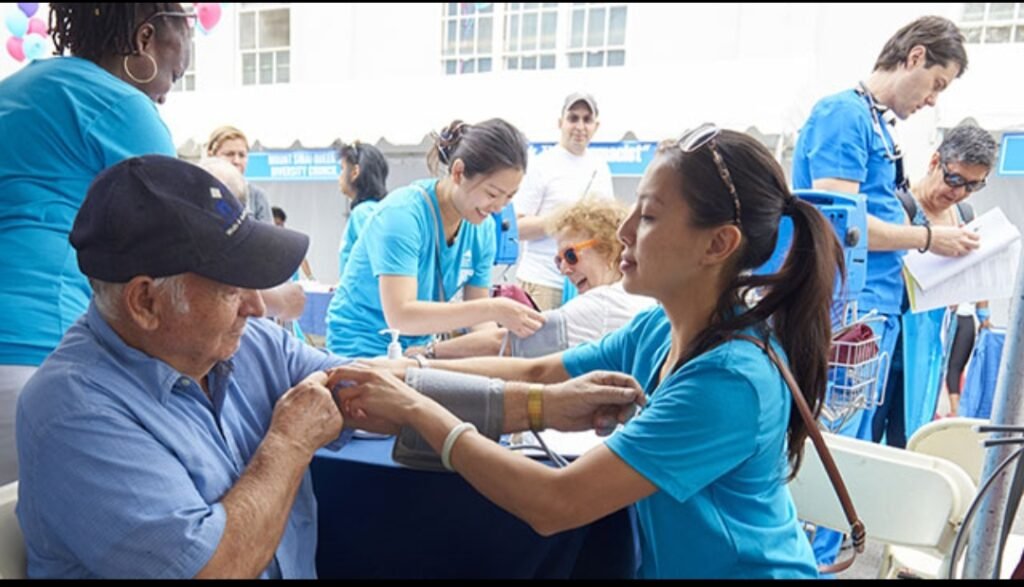
Part 4: Questions
76–100 (HR, Behavioral & Advanced Nursing Interview Questions)
These questions focus on human resources (HR), professionalism, time management, teamwork, career goals, and real-life nursing scenarios that recruiters frequently ask during interviews.
HR & Professional Interview Questions
- How do you manage your time during a busy shift?
Sample Answer:
I prioritize patient care according to clinical urgency, organize my tasks at the beginning of the shift, communicate effectively with the healthcare team, delegate responsibilities appropriately when permitted, and remain flexible when patient conditions change. - How do you handle workplace stress?
Sample Answer:
I stay organized, focus on one task at a time, communicate with colleagues, maintain a positive attitude, and use healthy stress-management techniques such as exercise, adequate rest, and continuous learning. - Tell us about a challenging patient you cared for.
Sample Answer:
During my clinical training, I cared for an anxious patient who repeatedly refused treatment. I listened to the patient’s concerns, explained the treatment plan in simple language, involved my supervising nurse, and built trust through respectful communication. Eventually, the patient agreed to receive care. - How do you deal with criticism?
Sample Answer:
I welcome constructive feedback because it helps me improve professionally. I carefully listen, reflect on my performance, ask questions if needed, and apply the suggestions to provide better patient care. - What would you do if you didn’t know the answer to a clinical question?
Sample Answer:
I would never guess. I would consult hospital guidelines, ask an experienced colleague or supervisor, or seek guidance from the appropriate healthcare professional while ensuring patient safety.
Communication & Teamwork - Why is teamwork important in nursing?
Sample Answer:
Healthcare is a team effort. Effective teamwork improves communication, reduces errors, enhances patient safety, and ensures timely, coordinated care. - How do you communicate with difficult patients?
Sample Answer:
I remain calm, listen actively, acknowledge their concerns, avoid arguments, explain information clearly, and treat every patient with dignity and respect. - What would you do if you disagreed with another nurse?
Sample Answer:
I would discuss the issue professionally and respectfully, focusing on patient safety rather than personal opinions. If necessary, I would involve the nurse manager according to hospital policy. - Describe excellent customer service in nursing.
Sample Answer:
Excellent customer service means treating every patient with kindness, respect, empathy, and professionalism while responding promptly to their needs and maintaining high standards of care. - How do you maintain professionalism at work?
Sample Answer:
I follow hospital policies, respect patient confidentiality, communicate professionally, maintain punctuality, demonstrate accountability, and continuously improve my clinical knowledge.
Scenario-Based Nursing Interview Questions - What would you do if a patient suddenly collapsed?
Sample Answer:
I would assess responsiveness, activate the emergency response system, assess airway, breathing, and circulation, begin CPR if indicated and trained to do so, and follow hospital emergency protocols until additional help arrived. - A patient refuses treatment. What is your response?
Sample Answer:
I would assess the patient’s understanding of the treatment, explain the benefits and risks in simple language, answer questions, respect the patient’s right to refuse, document the refusal accurately, and notify the appropriate healthcare provider according to policy. - What would you do if you suspected patient abuse?
Sample Answer:
I would ensure the patient’s immediate safety, document objective findings, report my concerns through the appropriate safeguarding or reporting process as required by hospital policy and local laws, and maintain patient confidentiality. - How would you respond to a patient fall?
Sample Answer:
I would assess the patient for injuries, avoid moving them if a serious injury is suspected unless there is immediate danger, notify the physician and supervisor, monitor vital signs, document the incident, and follow the organization’s fall management protocol. - What if you accidentally broke sterile technique?
Sample Answer:
I would immediately stop the procedure if appropriate, replace any contaminated equipment with sterile supplies, re-establish sterility, and continue only when a sterile field has been restored to protect patient safety.
Career Development Questions - Why do you want to continue learning?
Sample Answer:
Healthcare is constantly evolving. Continuing education helps me stay current with evidence-based practices, improve my clinical skills, and provide safe, high-quality patient care. - Are you willing to work night shifts?
Sample Answer:
Yes. I understand that nursing requires flexibility, and I am prepared to work rotating shifts, weekends, and holidays as required to support patient care. - How do you stay updated with nursing knowledge?
Sample Answer:
I attend workshops, participate in continuing education programs, read professional journals, review updated clinical guidelines, and engage in online learning opportunities. - What specialty interests you most?
Sample Answer:
I am interested in __ because it allows me to develop specialized clinical skills while making a meaningful difference in patient outcomes. (Customize this answer based on your career goals.) - Why should we select you over other candidates?
Sample Answer:
I bring strong clinical knowledge, a commitment to patient safety, effective communication skills, adaptability, and a genuine passion for nursing. I am eager to learn, work collaboratively, and contribute positively to your healthcare team.
Final Nursing Interview Questions - What is patient-centered care?
Sample Answer:
Patient-centered care involves respecting each patient’s preferences, values, and needs while involving them in healthcare decisions and providing compassionate, individualized care. - What does accountability mean in nursing?
Sample Answer:
Accountability means accepting responsibility for my actions, practicing within my scope, following professional standards, reporting errors appropriately, and always prioritizing patient safety. - What would you do if you made a clinical mistake?
Sample Answer:
I would immediately prioritize patient safety, report the incident according to hospital policy, document accurately, participate in appropriate follow-up actions, and learn from the experience to help prevent similar errors in the future. - What qualities define an outstanding nurse?
Sample Answer:
Outstanding nurses demonstrate compassion, integrity, critical thinking, clinical competence, adaptability, effective communication, teamwork, professionalism, empathy, and a commitment to lifelong learning. - Why do you believe you will become a successful nurse?
Sample Answer:
I am committed to continuous learning, delivering compassionate and safe patient care, working effectively with healthcare teams, and maintaining professional standards. I view every patient interaction as an opportunity to learn, grow, and make a positive different.
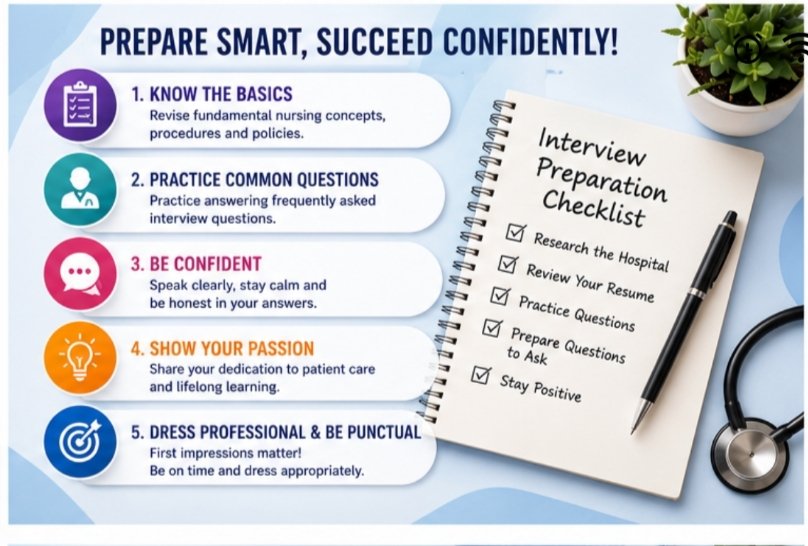
Nursing Interview Checklist
Before your interview, make sure you:
Research the hospital and its values.
Review common nursing procedures.
Refresh your medication safety knowledge.
Practice introducing yourself confidently.
Review infection prevention principles.
Prepare examples from your clinical experience.
Carry copies of your resume and certificates.
Dress professionally.
Arrive on time.Maintain a positive and confident attitude.
Common Nursing Interview Mistakes to Avoid
Arriving late.
Speaking negatively about previous employers.
Giving vague or overly brief answers.
Not reviewing basic nursing concepts.
Ignoring patient safety in scenario questions.
Failing to maintain eye contact or professional body language.
Not asking thoughtful questions when invited.
Frequently Asked Questions (FAQs)
- What is the most common nursing interview question?
“Tell me about yourself” is one of the most frequently asked opening questions. - How should I answer scenario-based nursing questions?
Use a structured approach: assess the situation, prioritize patient safety, explain your actions, and mention communication and documentation when appropriate. - What qualities do interviewers look for in nurses?
Clinical knowledge, compassion, communication, teamwork, professionalism, adaptability, accountability, and a strong commitment to patient safety. - How can fresh graduates prepare for a nursing interview?
Review nursing fundamentals, practice common interview questions, revise medication safety, and use examples from clinical placements to demonstrate your skills. - Is it okay to say “I don’t know” during an interview?
Yes. It’s better to acknowledge uncertainty and explain that you would consult guidelines or seek help from an experienced colleague rather than guessing in a real clinical situation.
Final Thoughts
A successful nursing interview is about more than remembering textbook answers. Employers want nurses who can communicate clearly, think critically, work well with others, and provide safe, compassionate care.Prepare thoroughly, practice your responses, and focus on demonstrating professionalism, confidence, and a commitment to lifelong learning. Every interview is an opportunity to grow and move one step closer to your dream nursing career.